8 Entryway Organization Ideas That Make Coming Home Less Chaotic
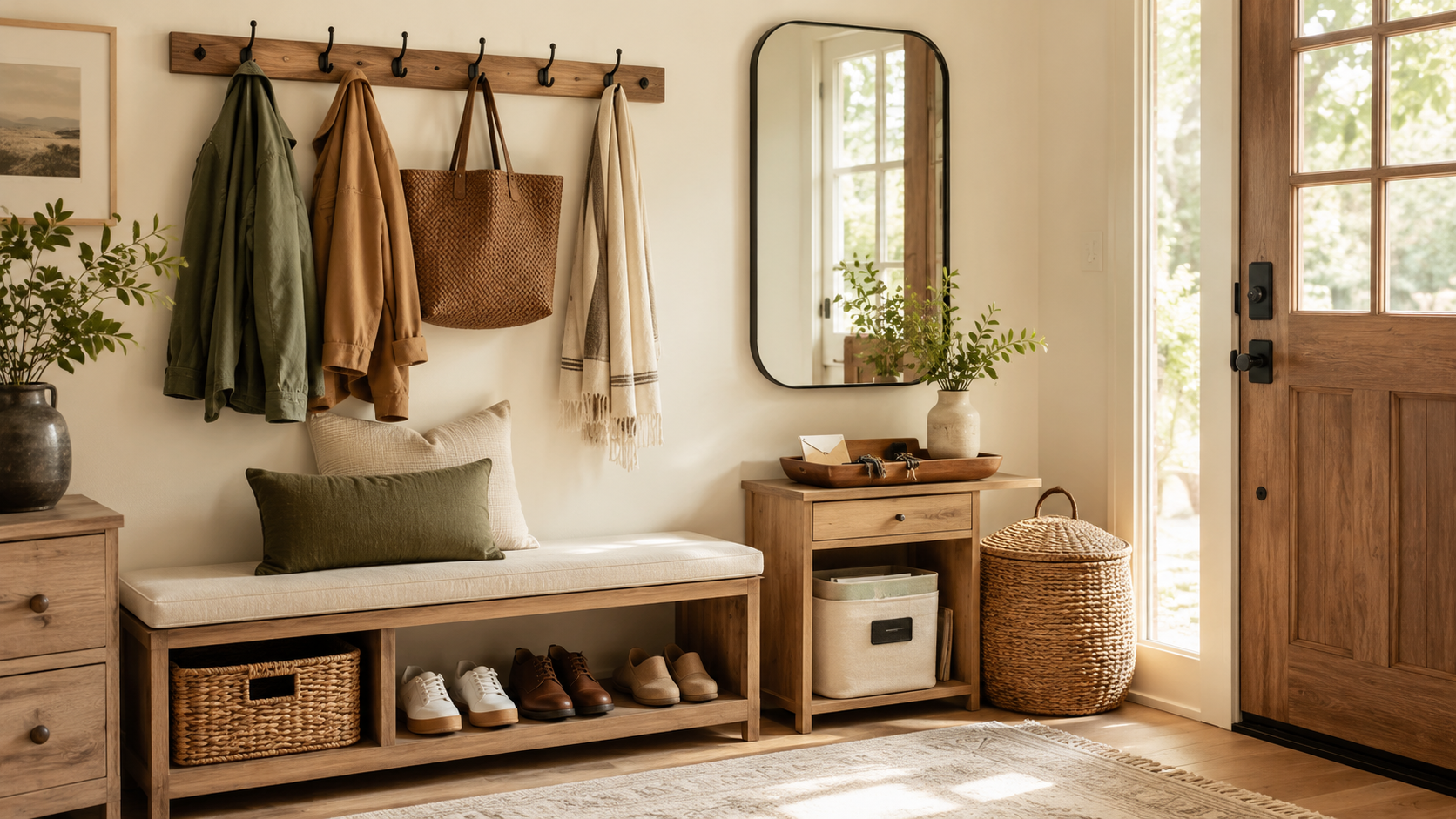
The entryway is one of the hardest-working spaces in a home, which is rude considering it’s usually the smallest and least planned.
It has to catch shoes, coats, keys, mail, backpacks, bags, dog leashes, packages, sports gear, and whatever random object someone sets down “just for a second.”
That second becomes three weeks. We all know the system.
A good entryway does not need to be huge or perfectly styled. It just needs a few dedicated spots for the things that come in and out of the house every day. The goal is not perfection. The goal is fewer piles, fewer lost keys, and fewer dramatic searches for someone’s left shoe five minutes before leaving.
Here are eight entryway organization ideas that can make the daily chaos much easier to manage.
1. A Landing Spot for Keys and Mail
Every entryway needs one small place for the things you drop the second you walk in.
A tray, dish, small basket, or wall-mounted organizer gives keys, mail, sunglasses, wallets, and small daily items a consistent home. Without one, those things migrate to counters, tables, bags, pockets, and mysterious alternate dimensions.
This does not need to be fancy. It just needs to be obvious and easy to use.
Why it works: It gives small daily items one clear place to land.
Why it’s worth it: You spend less time hunting for keys, mail, or the one thing you swear you just had.
2. A Bench With Shoe Storage
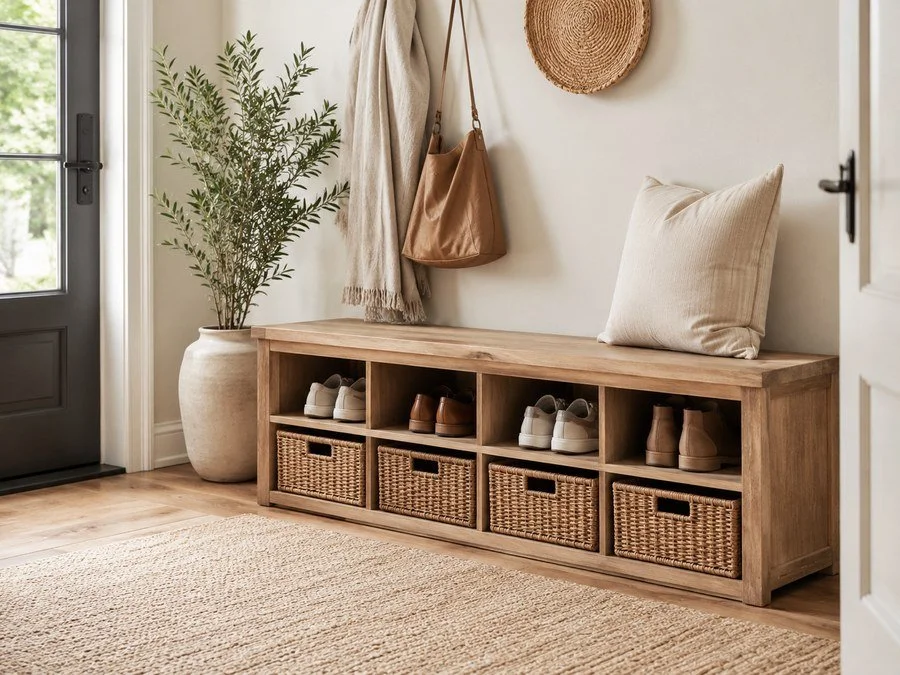
Shoes are usually the first thing to take over an entryway.
A bench with storage underneath solves two problems at once: you get a place to sit while putting on shoes, and the shoes get somewhere to live besides the middle of the floor like tiny trip hazards with laces.
Open cubbies work well if you want easy access. A lift-top bench or closed storage works better if you want the shoes hidden, which is understandable because shoes are not exactly decor’s finest moment.
Why it works: It combines seating and storage in one piece.
Why it’s worth it: The entryway looks cleaner, and shoes stop forming a small obstacle course by the door.
3. Wall Hooks at Multiple Heights
Hooks are one of the easiest ways to keep coats, bags, and backpacks off chairs, floors, and the backs of dining room furniture that never agreed to this job.
Use a row of hooks at adult height for coats and bags. If you have kids, add a lower row they can actually reach. Otherwise, their stuff will still end up on the floor, and technically they’ll be right because the system was built for giants.
Hooks are also easier than hangers, especially in a busy household. If the goal is getting people to use the system, make it almost impossible to mess up.
Why it works: Hooks make coats, bags, and backpacks easy to hang up quickly.
Why it’s worth it: Less outerwear ends up dumped on furniture or spread across the floor.
4. A Closed Basket or Cabinet for Random Stuff
Every entryway has a category best described as “stuff.”
Umbrellas. Sunscreen. Dog leashes. Reusable bags. Hats. Gloves. Small sports items. Things that need to leave the house eventually but apparently not today.
A closed cabinet, lidded basket, or large bin gives those random items one contained place to go. It keeps the entryway looking calmer without requiring every single object to have a perfectly labeled tiny home.
Because sometimes the category really is just “please stop being visible.”
Why it works: It contains miscellaneous items before they spread across every surface.
Why it’s worth it: The entryway looks more organized, even when real life is still doing real-life things.
5. A Mirror Near the Door
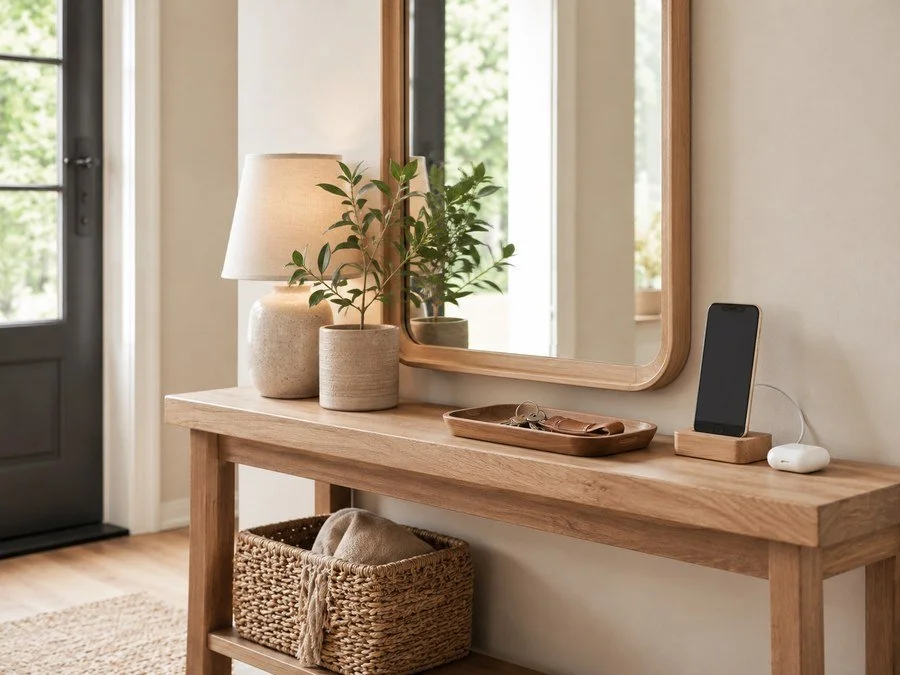
A mirror near the entryway does more than look nice.
It gives you a last-minute check before leaving the house, which is helpful if you would like to know about the toothpaste, weird hair situation, or mystery fuzz before entering society.
It also reflects light and can make a small entryway feel brighter and more open. If your entryway is narrow or dark, a mirror can make the space feel less cramped without adding bulky furniture.
Why it works: A mirror adds light, depth, and function.
Why it’s worth it: You get a quick last-look spot and a brighter-feeling entryway.
6. A Small Charging Station
If phones, earbuds, watches, or other devices tend to land wherever gravity chooses, a charging station can help.
A small charging dock, cord organizer, or designated outlet area near the door gives devices a predictable spot. This works especially well for items you grab on the way out, like earbuds, battery packs, smart watches, or school devices.
Just keep it contained. Otherwise, the entryway becomes a cord jungle, and nobody needs that kind of indoor wilderness.
Why it works: It creates one charging zone for daily devices.
Why it’s worth it: Devices are easier to find, charge, and grab before leaving.
7. Labeled Bins for Family Items
In a shared household, unlabeled entryway storage quickly becomes a crime scene of “whose is this?”
Labeled bins can help. Give each person a bin, or label by category: sports gear, school items, pet supplies, winter accessories, returns, or outdoor toys.
This works especially well for families because it removes some of the daily decision-making. Instead of yelling across the house about where something goes, the bin is already making its little administrative announcement.
Why it works: Labels give everyone a clear place for their own things.
Why it’s worth it: Shared entryways stay more organized with less arguing over mystery piles.
8. A Dedicated Spot for Outgoing Items
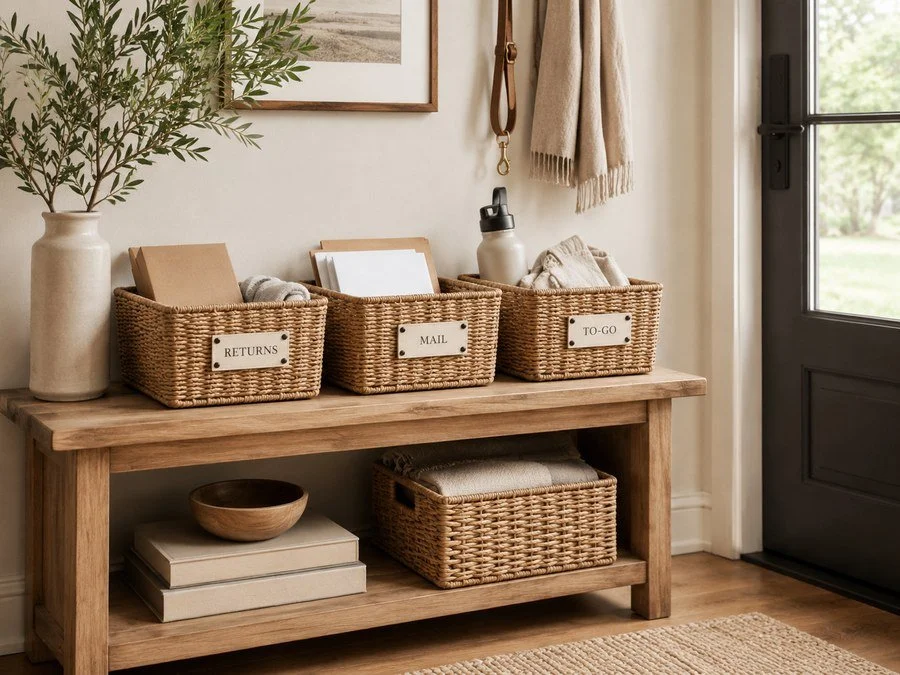
Every home needs a spot for the things that are supposed to leave the house.
Library books. Packages to mail. Items to return. School forms. Things for the car. Random object your friend left behind six months ago and you keep meaning to give back.
A small basket, shelf, or tray near the door keeps outgoing items visible so they do not get buried somewhere else. It is basically a waiting room for errands.
Why it works: It keeps leaving-the-house items in your line of sight.
Why it’s worth it: You are less likely to forget returns, packages, books, or things that need to go with you.
The Bottom Line
A good entryway organization system is not about making your home look perfect.
It is about giving everyday items a place to go so they stop taking over the floor, the counters, the chairs, and your will to function.
Start with the biggest problem. If shoes are everywhere, add a storage bench. If keys disappear, add a tray. If coats are taking over chairs, add hooks. If everyone’s stuff blends into one family-sized pile of confusion, add labeled bins.
The best entryway setup is simple, obvious, and easy enough for everyone to use — even the people who claim they “didn’t know where it goes” while standing directly next to the labeled basket.
